

Destination weddings ask a lot of straight couples too: budgets, guest logistics, weather contingencies. For LGBTQ+ couples, there's an additional layer most planning guides never mention — because most planning guides weren't written with us in mind. Before the flowers, the flights, or the guest list, there's a quieter question that has to get answered first: is this country going to recognize our marriage, and if not, are we okay with that?
That question shapes everything downstream, from which countries make sense to which vendors will actually understand what you're building. Here's how to think it through.
Do you need your destination wedding to be legally binding?
Not necessarily, and for a lot of couples, the answer is no by design.
A common and often smarter approach is to separate the legal marriage from the celebration entirely. Handle the paperwork at a courthouse at home, then travel for a symbolic ceremony that carries all the meaning without any of the bureaucratic risk. A symbolic ceremony isn't a lesser version of a wedding, it's the version where you get to control every detail, without a foreign government's residency rules or waiting periods dictating your timeline.
If a legally binding wedding abroad still matters to you, know that a resort's on-site wedding coordinator might not always be the right person to guide you through it. Their job is the day-of logistics and the property's own operations. Getting the legal side right, foreign embassy affidavits, apostilles, certified translations, requires a wedding planner who works independently and knows the specific legal landscape of that country, ideally one with direct experience handling same-sex couples' paperwork, since the requirements aren't always identical to what a straight couple would submit.
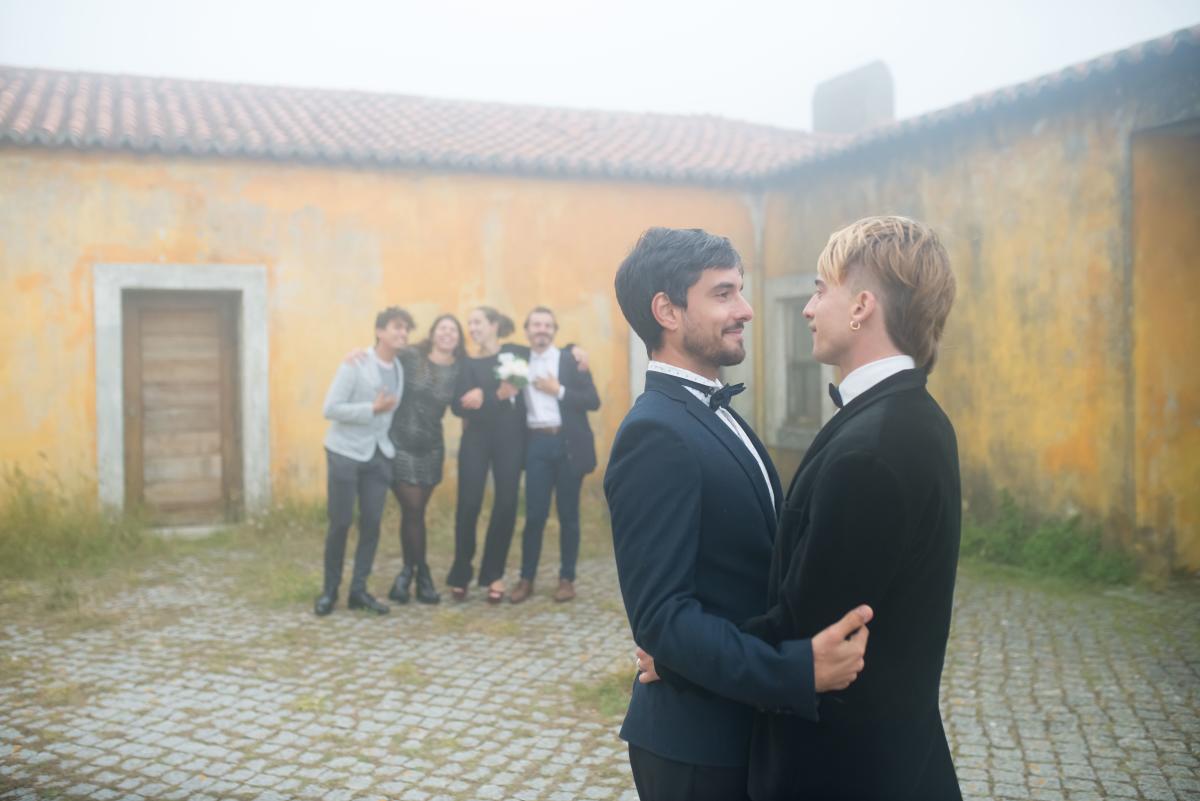
Which countries are actually good options for a legal same-sex wedding abroad?
A handful of destinations get most of the attention right now, and for good reason, though "trending" and "right for your wedding" aren't always the same thing.
Thailand legalized same-sex marriage on January 23, 2025, becoming the first country in Southeast Asia and the third in Asia, after Taiwan and Nepal, to do so. The law applies equally to Thai nationals and foreign couples, including two foreign nationals marrying each other. You'll need valid passports, a certificate of no impediment (or equivalent "affirmation of freedom to marry") from your embassy in Bangkok, and certified Thai translations of your documents. The paperwork is manageable but detail-heavy, and Thailand's floral and event design vendors are some of the most creative and LGBTQ+-supportive in the region.
Mexico has had nationwide marriage equality since 2022, when the last of its 32 states came into compliance. A legal civil ceremony requires four witnesses and, in every state, a blood test completed at a Mexican clinic within 14 days of the wedding, screening for HIV and syphilis. It's a holdover from older public health law rather than anything specific to LGBTQ+ couples, but it catches a lot of people off guard, and it's a legitimate reason many couples opt for a symbolic ceremony instead. Mexico's LGBTQ+ wedding vendor network, especially around Puerto Vallarta and the Riviera Maya, is genuinely one of the most developed in the world.
Spain has recognized same-sex marriage since 2005, one of the earliest countries to do so, but a legal civil wedding requires at least one partner to have held Spanish residency for roughly two years. Couples without that residency history typically go the symbolic route, which is where Spain's inclusive vendor market, from Ibiza to Mallorca, really shines.
Malta has allowed same-sex marriage since 2017 and is one of the more accessible European options for foreign couples. There's no residency requirement, but you'll need to submit your documents, including a Certificate of No Impediment, to the Public Registry's Marriage Registry Section no earlier than three months and no later than six weeks before your wedding date.
Canada has had marriage equality since 2005 and is arguably the simplest legal path of the group. A provincial marriage license and a local officiant are all that's required, with no residency wait.
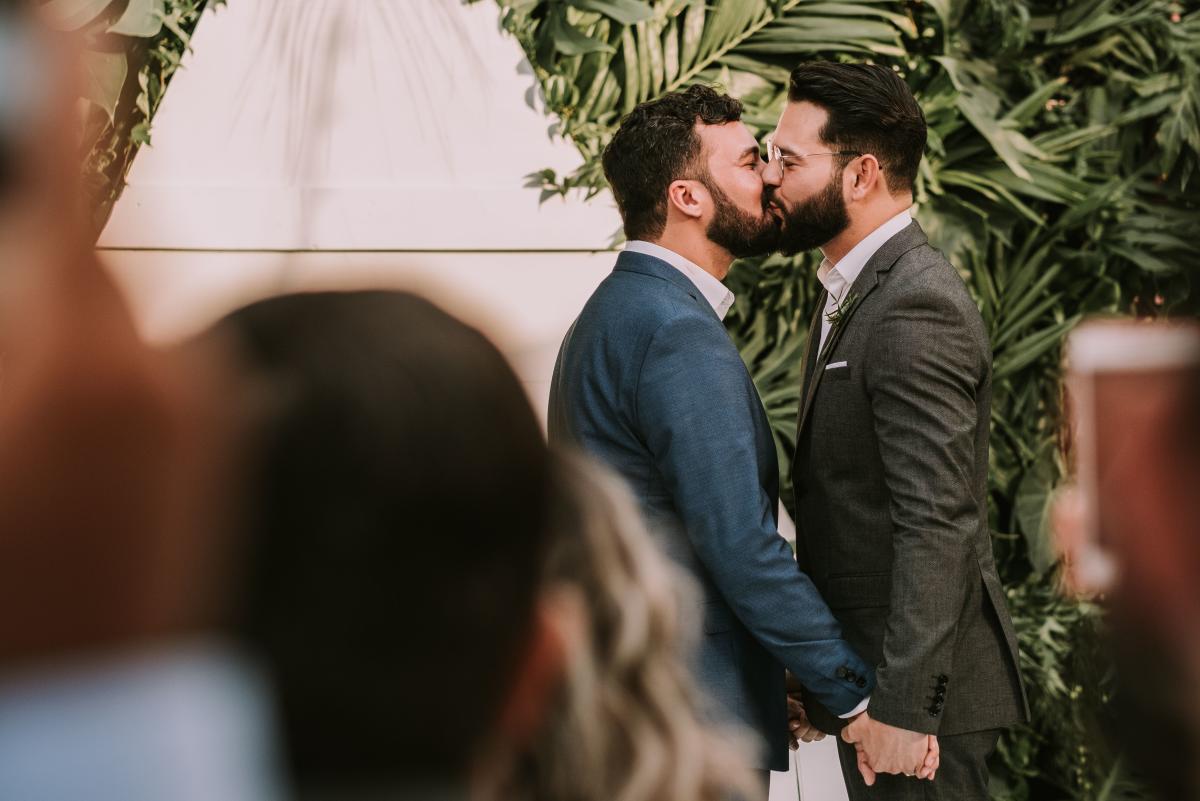
What about countries without full marriage equality?
This is where the trend-chasing instinct can work against you. Following the current hot list means overlooking places that offer something just as real.
Italy is the clearest example. Since 2016, Italy has recognized civil unions, which extend most of the legal protections of marriage, inheritance, shared property, pension rights, but not joint adoption, and it stops short of marriage itself. As of 2026, Italy remains the only major country in Western Europe without full marriage equality on the books, despite years of public support and parliamentary attempts to change that. None of which makes a wedding in Tuscany or on the Amalfi Coast any less real. A symbolic ceremony there carries the same emotional weight as one held anywhere with full legal recognition, and Italy's queer wedding community, though smaller than Mexico's or Spain's, is warm, established, and used to hosting couples who understand exactly what they're signing up for legally.
The broader point: full marriage equality is one factor in choosing a destination, not the only one. A country with a strong on-the-ground LGBTQ+ vendor network and a track record of welcoming queer couples can be a better choice than a country with equality on paper but no infrastructure to back it up.

How do you tell if a venue actually welcomes LGBTQ+ weddings, or just tolerates them?
Marketing materials tell you more than any welcome email will. Before booking, look closely at a property's wedding brochures, its social media, its past real-wedding features. Are queer couples actually shown, not just mentioned in a diversity statement? Are couples of color represented, or is the imagery uniformly white and heteronormative?
If a resort claims to host LGBTQ+ weddings but every photo tells a different story, that gap is the answer. Your wedding shouldn't be the first time a venue has hosted a queer couple, and there's a real difference between a property that accepts your booking and one whose staff, officiants, and photographers already know how to work with you.
Johnny Rios (he/him) is the owner of Prism Premier Travel, a gay-owned travel agency dedicated to creating safe, joyful travel experiences for the LGBTQ+ community. Join his private Facebook group at https://www.facebook.com/groups/lgbtqtravelbyjohnny to stay in the know on all things LGBTQ+ travel.