

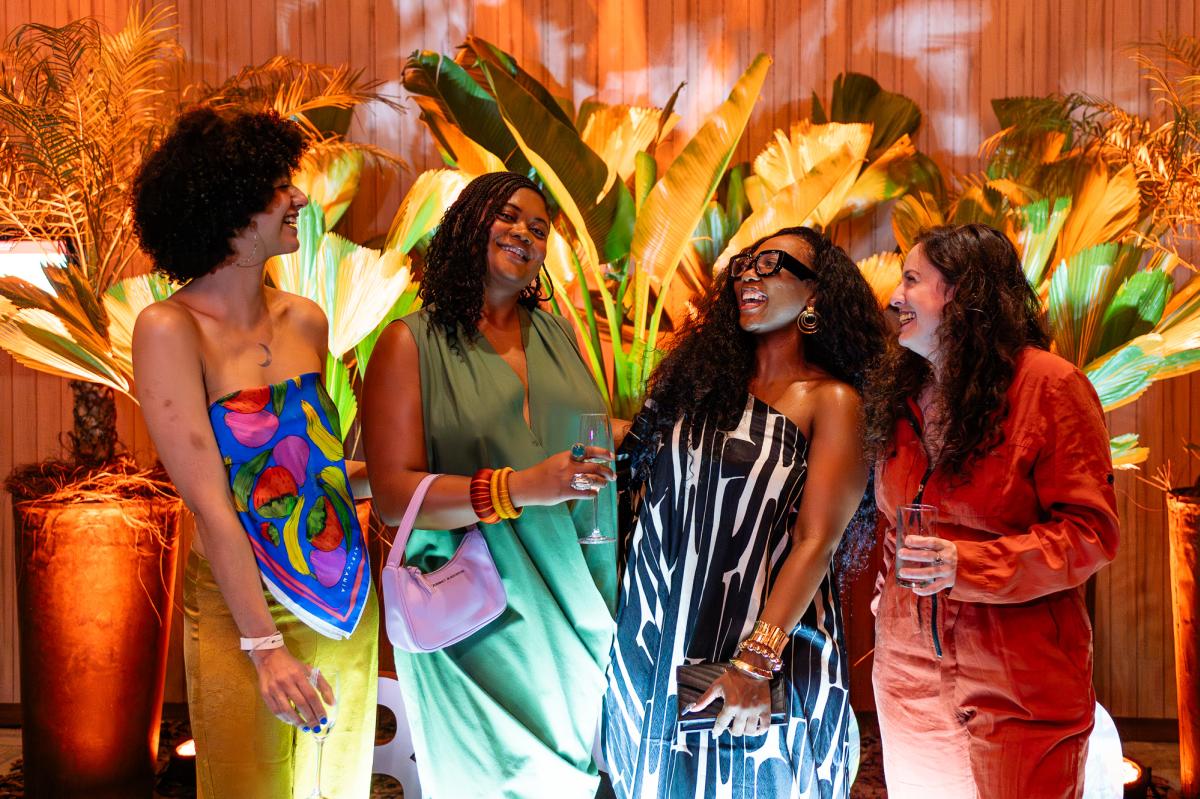
This year’s Black Travel Summit (BTS) was more than a conference — it was a mirror held up to our industry.
With IGLTA members present in Rio de Janeiro, participating, listening, and building, the moment mattered deeply. Not just symbolically, but structurally. Because if tourism is about connection, then intersectionality in tourism is about who gets to be fully seen within those connections.
The Black Travel Summit is a global space where Black travel professionals, creators, and entrepreneurs are not “the niche,” but the center. And when LGBTQ+ tourism organizations and businesses show up in those spaces with intention, it sends a clear message: our communities overlap, and our work must reflect that reality.
Intersectionality Is Lived, Not Theoretical
For many travelers — especially Black LGBTQ+ travelers — identity is never singular. Race, sexuality, gender expression, nationality, religion, and ability intersect in ways that directly shape how safe, welcomed, and represented someone feels when they travel.
Intersectional tourism acknowledges that a destination can be “LGBTQ+ friendly” and still feel unsafe for Black travelers — a reality my own company, Lunfarda Travel, encounters in Argentina, a country with a rich Black history, a small present-day Black community, and a tourism narrative that remains overwhelmingly white-centric. It also acknowledges that a Black-owned business may not automatically be inclusive of queer identities.
These nuances are uncomfortable. But avoiding them doesn’t make them disappear — it just makes tourism less honest.
What I saw at the Black Travel Summit, and what I value deeply in IGLTA’s presence there, was a willingness to sit with that complexity instead of smoothing it over for marketing purposes. There was also a clear purpose: to act as agents of change in opening up the world for Black travelers — whether in Argentina, Brazil, or Milwaukee, where IGLTA member Tony Snell Rodriguez (he/him) of Visit Milwaukee is organizing the 2026 Black Travel Summit.
When DEI Becomes Public Policy, Everything Changes
One of the most powerful takeaways from BTS was hearing the range of voices reshaping Black travel — from travel advisors to content creators to destination leaders. Among them, one example stood out as exceptional.
Visit Brasil, led by Tania Neres (she/her), has made Afro-tourism and diversity-centered tourism a core national strategy, not a side initiative. They stopped centering the destination alone and began centering the diversity of its people.
The results speak for themselves. Brazil achieved in just two years the outcomes it projected for five, and is now breaking inbound tourism records — a powerful demonstration of what’s possible when public policy, private enterprise, and community representation align.
Why This Matters for the Future of Tourism
The future of tourism isn’t just more diverse — it’s more discerning.
Travelers are asking better questions:
-
Who owns this company?
-
Who benefits from my trip?
-
Who is missing from this story?
Organizations like IGLTA have a unique role to play — not only as advocates for LGBTQ+ inclusion, but as connectors across communities that have historically been marginalized and separated from one another.
Showing up at the Black Travel Summit is one step. Continuing to listen, invest, collaborate, and sometimes be uncomfortable — that’s the work.
Intersectional tourism isn’t a trend. It’s a recognition of the nuanced, complex realities of the people who make up our world — and a roadmap for opening that world more honestly, more safely, and more meaningfully to all of them.
And the more our industry aligns with that reality, the more resilient, ethical, and impactful it becomes for everyone involved.
About the Author
Mariana Radisic Koliren (she/her) is the Founder of Lunfarda Travel, an Argentina DMC and tour operator. She's passionate about developing travel products with underrepresented communities such as the LGBIQA+, Afro-Argentine or Jewish local communities with the goal of fostering deep cultural connections and empowering the locals stewards of Argentine culture. Mariana is a former IGLTA Foundation Fellowship recipient and Lunfarda Travel was honored with the IGLTA Foundation Impact Award for the company’s dedication to inclusive tourism. Find out more at www.lunfardatravel.com.